LSG vs PBKS at Ekana, Match 68: A Fantasy Cricket Retrospective from 23 May 2026
On Saturday, 23 May 2026, Lucknow Super Giants hosted Punjab Kings in IPL 2026 Match 68 at Bharat Ratna Shri Atal Bihari Vajpayee Ekana Cricket Stadium. The 7:30 PM IST start sat late in the league phase, and the fantasy brief published that evening by CricTracker still rewards a careful re-read: both sides arrived on losing form, Mitchell Marsh was already unavailable, and Ekana’s balanced, spin-friendly surface set a first-innings average around 165 rather than a pure powerplay shootout.
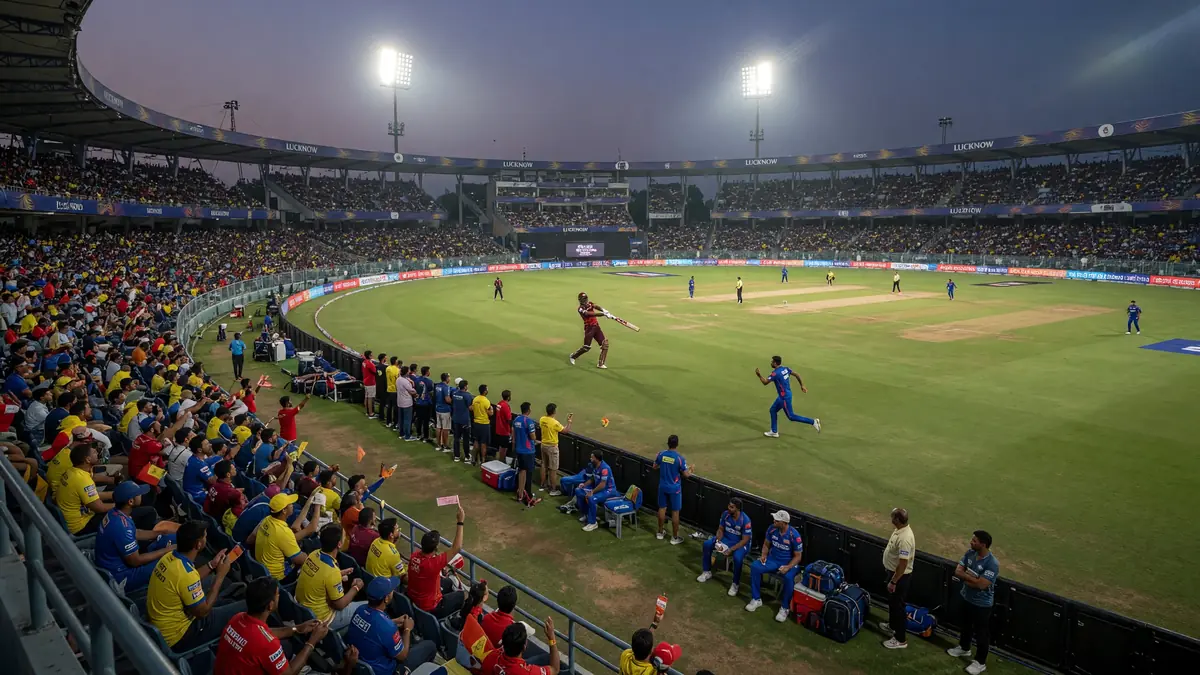
Why Match 68 still matters for fantasy readers
Match 68 was not a final or a playoff, yet it remains a useful case study for Indian fantasy players who still build sides around late-league IPL fixtures. Both teams walked into Ekana under pressure. Lucknow’s recent five-match form read L-W-L-W-L. Punjab’s read L-L-L-L-L. That sequence alone forced a different credit conversation from the mid-season weeks when either franchise could lean on a hot streak.
The previous-game detail still frames the night. Lucknow had just posted 220 against Rajasthan Royals and still lost by seven wickets, with Rajasthan finishing the chase in 19.1 overs. Mitchell Marsh made 96 off 57 and Josh Inglis 60 off 29 in that innings, while Akash Singh and Mohsin Khan took one wicket each. Punjab had just fallen 23 runs short against Royal Challengers Bengaluru after RCB set 222 and PBKS replied with 199. Shashank Singh scored 56 and Cooper Connolly 37 in the chase; Harpreet Brar returned 2 for 35, with Arshdeep Singh and Yuzvendra Chahal taking one each.
Those two scorecards told fantasy managers two different things. Lucknow could still pile runs through the top and middle, but the bowling share was not closing games. Punjab could still produce half-centuries in a chase, yet five straight losses meant the public market was already discounting several of their higher-owned names. The Match 68 brief was less about brand reputation and more about who actually stayed in the XI once Marsh left for Australia’s Pakistan tour camp.
Form into the fixture and the Marsh availability cut
The single largest availability fact of the preview was Mitchell Marsh’s absence. CricTracker recorded that Marsh was joining the Australian camp for the Pakistan tour and would not be available for the Lucknow fixture. That cut mattered beyond one name on a team sheet. Marsh had just made 96 off 57 against Rajasthan, and the same desk noted he had scored 499 runs at a strike rate of 169 across his previous ten games. Any Dream11 construction that still carried him into Match 68 was building on a player who was already confirmed out.
Once Marsh was removed, Lucknow’s probable XI shifted toward a different shape. The listed side was Josh Inglis, Arshin Kulkarni, Rishabh Pant as captain, Nicholas Pooran, Ayush Badoni, Akshat Raghuwanshi, Shahbaz Ahmed, Akash Singh, Mayank Yadav, Prince Yadav and Mohsin Khan. Inglis kept the top-order tempo role he had just advertised with 60 off 29. Pant held the captaincy and the keeping gloves. Pooran remained the left-hand finishing threat. The bowling spine sat with Mayank Yadav’s pace, Mohsin Khan’s left-arm seam, Akash Singh, and the two spin-or-change options in Shahbaz Ahmed and Prince Yadav.
Punjab’s probable XI held more continuity. Prabhsimran Singh kept wicket, Priyansh Arya opened with him, Cooper Connolly sat in the top order, Shreyas Iyer captained, Shashank Singh and Marcus Stoinis filled the middle, Azmatullah Omarzai and Marco Jansen covered the all-round band, and Arshdeep Singh, Harpreet Brar and Yuzvendra Chahal closed the attack. That is a classic Punjab mix of early right-hand power, a left-hand overseas batter, and a spin pair that thrives when Ekana grips later in the night.
LSG probable XI (Match 68)
- Josh Inglis, Arshin Kulkarni
- Rishabh Pant (c)
- Nicholas Pooran, Ayush Badoni
- Akshat Raghuwanshi, Shahbaz Ahmed
- Akash Singh, Mayank Yadav
- Prince Yadav, Mohsin Khan
Marsh unavailable; Inglis and Pant carried the top-order ownership.
PBKS probable XI (Match 68)
- Prabhsimran Singh (wk), Priyansh Arya
- Cooper Connolly, Shreyas Iyer (c)
- Shashank Singh, Marcus Stoinis
- Azmatullah Omarzai, Marco Jansen
- Arshdeep Singh, Harpreet Brar
- Yuzvendra Chahal
Five-match losing run, but the XI kept a clear batting hierarchy.
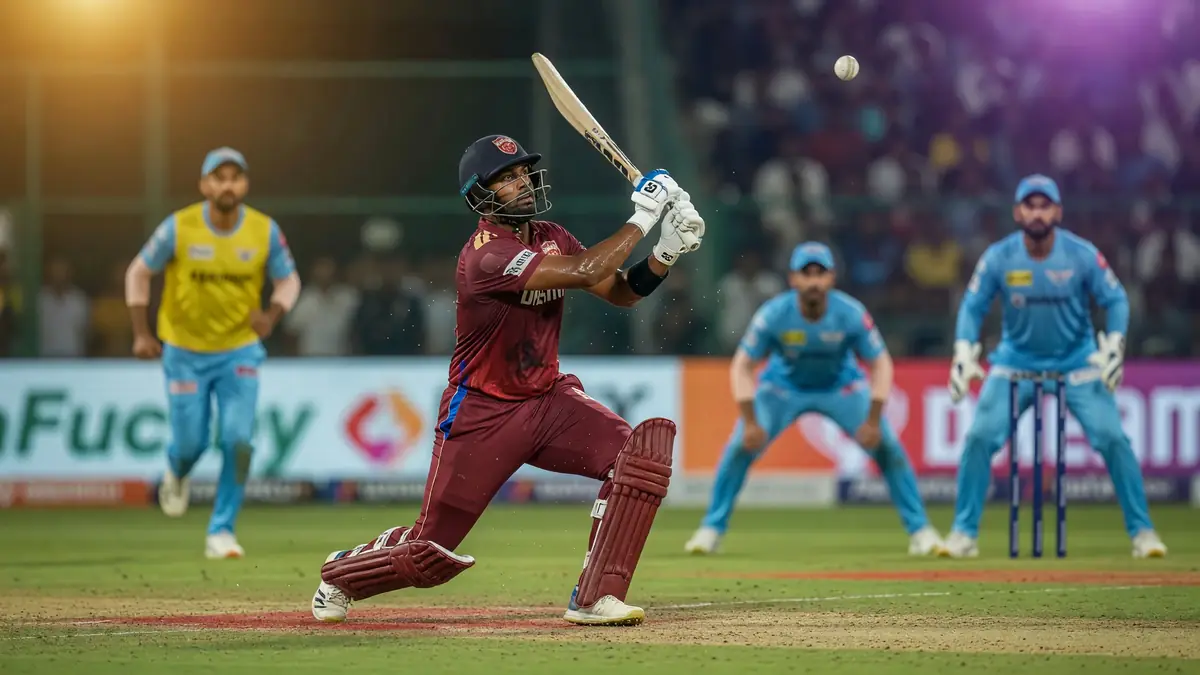
Ekana’s surface, weather and broadcast context
Ekana on 23 May was described as a balanced surface with spin-friendly character, bounce and pace, and an average first-innings score around 165. That is not a 190-plus automatic pitch brief. It is a middle band where captains still matter more than pure death-over speculation, and where a quality spinner can outscore a third seamer if the ball starts to hold. Fantasy sides that stacked four pure pacers without a confirmed spin route were fighting the venue profile rather than using it.
Weather around the start window was listed as cloudy, 33.3°C with 52% humidity. Cloud cover at Ekana often keeps the new ball honest for a few overs without turning the night into a washout risk. For managers, that slightly lifted the floor of confirmed new-ball names such as Arshdeep Singh and Mayank Yadav, without justifying a complete abandonment of Chahal or Brar. Broadcast coverage sat on Star Sports Network, with the live stream on JioHotstar — useful only as context for when official XI graphics and toss notes actually reached the public market.
Readers who still want a broader Indian-market framing of how Dream11 contests route around captain choices, credit maps and venue roles can return to the wider Fantasy Cricket notes after finishing the Match 68 record. For this fixture alone, the surface and the Marsh cut were the two facts that separated a disciplined side from a reputation side.
Captain and vice-captain ladder that the desk actually published
The CricTracker captain ladder for Match 68 still looks slightly odd once Marsh’s unavailability is held next to it. The published captain and vice-captain highlights were Mitchell Marsh as captain and Prabhsimran Singh as vice-captain. In a live lock that combination only made sense if Marsh’s withdrawal note arrived after the first draft of the captaincy panel, or if the captain tag was left as a season-form pointer rather than a confirmed XI pick. For anyone revisiting the brief as a historical document, the practical reading is clearer: Marsh was the form captain of the preceding fortnight, but he was not a legal Match 68 selection once the Australia camp note locked in.
Prabhsimran Singh was the cleaner confirmed route. The same desk noted he had scored 361 runs across his previous ten games and remained Punjab’s primary top-order wicketkeeper-batter. On a 165-par Ekana surface, a keeper who faces the new ball still carries batting points, catch points and a realistic ceiling if the powerplay stays honest. Shreyas Iyer, as captain and middle-order anchor, was the natural alternative multiplier if managers wanted Punjab ownership without paying full price for the opener.
On the Lucknow side, once Marsh was removed, the captain conversation moved to Josh Inglis and Rishabh Pant. Inglis had just made 60 off 29 against Rajasthan and sat at the top of the probable XI. Pant held captaincy bonus potential inside the real match and the keeping role in fantasy. Nicholas Pooran remained the higher-variance finishing option rather than a safe cash-contest anchor. None of those three replaced Marsh’s dual-skill floor; they simply redistributed the credit that Marsh would otherwise have absorbed.
Pitch cue
Balanced Ekana strip, spin-friendly with bounce and pace. First-innings average around 165. Build one quality spinner into every serious map.
Conditions cue
Cloudy, 33.3°C, 52% humidity. New-ball seam stays live without killing spin later. Lift Arshdeep and Mayank only if both are confirmed.
Form cue
LSG L-W-L-W-L after a 220 that still lost to RR. PBKS L-L-L-L-L after a 199 chase fell 23 short of RCB’s 222.
Availability cue
Mitchell Marsh unavailable for Australia’s Pakistan tour camp. Any lingering Marsh captain tag was form history, not a Match 68 pick.
Core, differential and avoid bands from the Match 68 brief
Core band on the published probable XIs: Josh Inglis, Rishabh Pant, Nicholas Pooran, Shahbaz Ahmed, Mayank Yadav, Mohsin Khan, Prabhsimran Singh, Shreyas Iyer, Shashank Singh, Arshdeep Singh, Yuzvendra Chahal. Those eleven covered top-order batting, keeping roles, confirmed seam and the spin route Ekana usually rewards. The twelfth and thirteenth fantasy slots were where the contest separated.
Differential band: Cooper Connolly, Marco Jansen, Azmatullah Omarzai, Harpreet Brar, Arshin Kulkarni, Akash Singh, Prince Yadav. Connolly had just made 37 in the RCB chase and offered left-hand separation from the more owned Punjab names. Jansen and Omarzai were the dual-skill overseas routes if either bowled a full share. Brar’s 2 for 35 against RCB kept him live as a spin differential. Kulkarni and Akash Singh were the Lucknow ownership traps if the public over-indexed on Pant and Pooran alone.
The published avoid list named Ayush Badoni and Vishal Nishad. Badoni still appeared in Lucknow’s probable XI, so the avoid tag was a role-risk call rather than a confirmed-out call: middle-order batters who do not bowl and may face only a handful of balls on a 165 surface are expensive when the credit is needed for a second spinner or a confirmed new-ball seamer. Nishad sat in Punjab’s bench group, which made the avoid note simpler — bench names do not belong in cash contests before the card is locked.
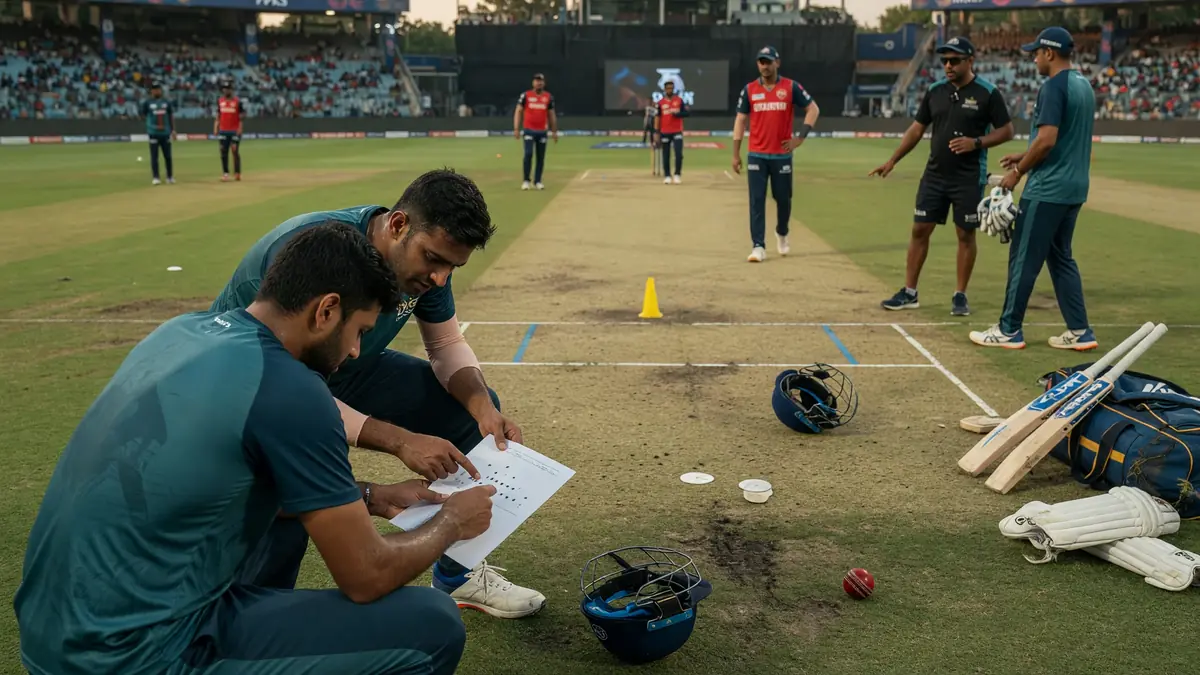
Two credit maps that still teach the right lesson
A balanced Lucknow-leaning map on the probable card looked like this: Rishabh Pant (wk); Josh Inglis, Nicholas Pooran, Prabhsimran Singh, Shreyas Iyer; Shahbaz Ahmed, Marcus Stoinis, Marco Jansen; Mayank Yadav, Arshdeep Singh, Yuzvendra Chahal. That construction kept three confirmed top-order batters across both sides, one dual-skill overseas route, and a seam-plus-spin bowling spine that matched Ekana’s 165 average rather than chasing a fictional 200-par night.
A Punjab-heavier differential map flipped the ownership: Prabhsimran Singh (wk); Priyansh Arya, Cooper Connolly, Shashank Singh, Josh Inglis; Shreyas Iyer, Azmatullah Omarzai, Harpreet Brar; Arshdeep Singh, Mayank Yadav, Yuzvendra Chahal. Use of that map only made sense if managers believed Punjab’s five-match losing run had already pushed ownership too far toward Lucknow’s brand names. The risk was obvious: if Inglis and Pant converted the powerplay, the Lucknow dual-skill premium was thin and the return leaned entirely on Punjab’s middle order.
Neither map is a modern lock recommendation. Both are historical illustrations of how the Match 68 brief should have been read once Marsh was removed. The common error in late-league IPL contests is to keep last week’s captain in the side after the availability note has already moved. Match 68 is a clean example of that error, because the form captain and the available captain were no longer the same person by the time the toss graphics went up.
What the Match 68 record still teaches
First, treat availability notes as hard constraints, not footnotes. Marsh’s Australia camp exit was not a minor bench shuffle; it removed the highest-ceiling Lucknow batter from the entire credit map. Second, losing form does not automatically mean low fantasy value. Punjab arrived on five straight defeats and still carried Prabhsimran, Iyer, Shashank and a spin pair that fitted Ekana. Third, venue averages matter more than the previous high-scoring thriller. Lucknow had just made 220 and lost; that did not turn Ekana into a permanent 220 pitch the following night.
Fourth, captain ladders in fantasy previews can lag the injury and travel desk. When a published captain pick contradicts a confirmed absence in the same article, the absence wins. Fifth, avoid lists are only useful when they name a real role risk or a bench name. Badoni’s avoid tag was a minutes-and-role warning; Nishad’s was a simple non-XI warning. Mixing those two categories is how managers either over-cut a floating middle-order batter or accidentally keep a bench player.
For readers building IPL sides in later seasons, Match 68 remains a compact checklist: confirm the overseas exits, read the venue average before copying the previous scorecard, keep one spinner on a 165 surface, and do not let a five-match losing run erase a keeper who still faces the new ball. The fixture itself is closed. The method that should have been used on 23 May 2026 is still the method that wins ordinary league-stage contests.