Nutrition for Young Indian Athletes: 2026 Fueling Guide
Master nutrition for young athletes India with our 2026 guide. Get Indian meal plans, hydration tips & recovery strategies to boost your child's performance.

It's 7:00 PM and your child just walked through the door after a grueling training session, looking completely drained and reaching for a bag of fried snacks. For many parents, balancing traditional home-cooked meals with the high-energy demands of nutrition for young athletes India feels like a constant uphill battle. You want them to excel on the field, but meeting protein requirements in a vegetarian household or managing extreme fatigue after an evening session is a genuine challenge.
We know you're worried about their stamina and how this exhaustion might eventually impact their schoolwork. It's frustrating to see your child give their all during practice only to crash the moment they get home. This guide will help you master the science of sports nutrition tailored for the Indian palate to boost your child's energy and recovery. You'll get a clear meal plan that fits your kitchen, smart hydration strategies for the intense Indian heat, and a better understanding of the 2026 FSSAI guidelines for safe, science-backed fueling.
Key Takeaways
- Learn how to balance growth requirements with high-performance fuel using a specific macro-strategy for nutrition for young athletes India.
- Discover the "Golden Ratio" for athlete plates and how to incorporate local superfoods like Ragi and Bajra for sustained energy.
- Master the critical 3:00 PM to 5:00 PM window with light, high-carb snacks that prevent bloating and afternoon slumps.
- Replace generic bottled water with science-backed, homemade electrolytes like Nimbu Pani to combat the intense Indian heat.
- Understand how academy location and scheduling impact your child's recovery so you can optimize their daily training routine.
The Fundamentals of Nutrition for Young Athletes in India
Understanding the Fundamentals of sports nutrition is the first step toward helping your child succeed. Youth sports nutrition is the science of balancing a child's natural growth requirements with the massive energy expenditure of their sport. It's not just about eating more food; it's about eating the right fuel at the right time. For parents managing nutrition for young athletes India, this means looking beyond the typical family dinner table to meet the specific demands of a growing body in motion.
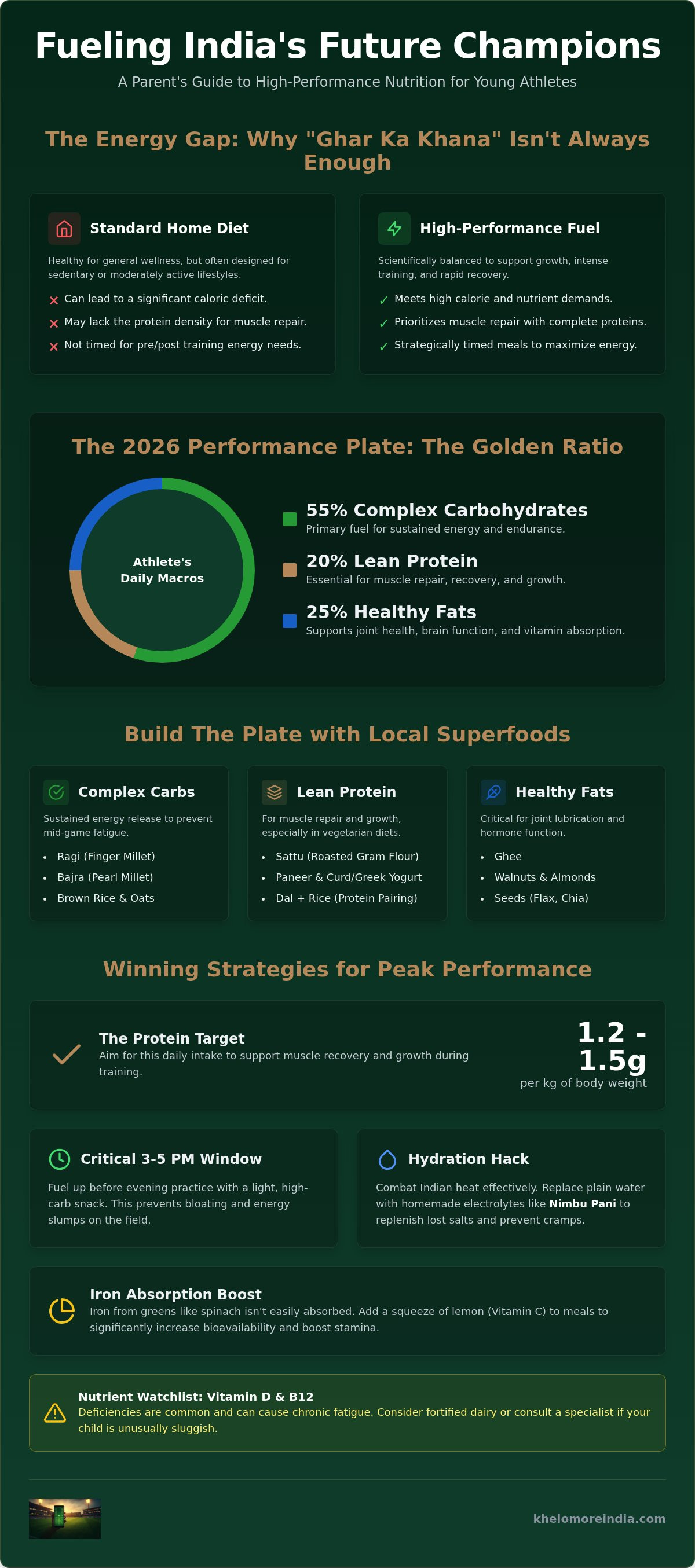
A standard "home diet" often falls short for competitive young athletes. While "ghar ka khana" is healthy, it's usually designed for sedentary or moderately active lifestyles. A child training for two hours in high humidity requires significantly more calorie density than a peer who only attends school. If they only eat what the rest of the family eats, they'll likely face a caloric deficit. This leads to persistent fatigue, poor concentration in school, and a higher risk of injury on the field.
The "Growth Spurts" factor makes this even more complex. Between the ages of 12 and 16, children undergo rapid physical changes. Their bones are lengthening and their muscle mass is increasing. During this window, their nutritional needs can change almost monthly. You can't rely on the same meal portions they had a year ago. You also have to consider bioavailability, especially with iron. In the Indian context, we eat plenty of greens like spinach, but the iron isn't always absorbed well due to certain compounds in grains. Adding a squeeze of lemon to their meals can help their body actually use that iron for better stamina.
The Protein Challenge in Indian Households
Many Indian families follow vegetarian or vegan diets, which can make meeting protein targets tricky. While dal and chawal are staples, they don't always provide the complete amino acid profile needed for muscle repair after a heavy session. You can bridge this gap by focusing on "protein pairing"-combining legumes with grains or incorporating high-quality dairy like paneer, curd, and Greek yogurt. As of 2026, sports nutritionists recommend that young Indian athletes consume between 1.2 to 1.5 grams of protein per kilogram of body weight daily to support both muscle recovery and natural growth.
Energy Demands: Carbs are Not the Enemy
Carbs often get a bad reputation, but for active children, they're the primary source of fuel. The key is differentiating between simple sugars that cause energy crashes and complex carbs that provide "slow-burn" endurance. In India's tropical climate, athletes need higher carb ratios to maintain energy levels through long matches. Focus on local options like brown rice, oats, or ancient millets. Don't ignore "good fats" either. A small amount of ghee or a handful of walnuts supports joint health and brain development. Planning these meals is much easier when you use the transparent coaching schedules found in our Sports Booking Guides to map out exactly when your child needs their pre-workout boost.
The 2026 Performance Plate: Essential Macronutrients and Local Superfoods
Building a performance plate doesn't require expensive imported ingredients like quinoa or kale. Instead, focus on the "Golden Ratio" designed for the high-intensity needs of youth sports. For optimal results, aim for a balance of 55% complex carbohydrates, 20% lean protein, and 25% healthy fats. This specific breakdown supports the unique Nutritional requirements for young athletes who need both immediate fuel for training and long-term energy for growth.
In the Indian context, ancient grains like Ragi (finger millet) and Bajra (pearl millet) are superior to processed wheat. They provide a sustained release of energy, preventing the mid-game fatigue that often plagues junior players. Another local powerhouse gaining traction in 2026 is Sattu. This roasted gram flour is an incredible "poor man’s protein" that works perfectly as a post-training recovery drink. It's easy on the stomach and provides the essential amino acids needed to repair muscle tissue without the high cost of imported supplements.
Addressing common deficiencies is also vital for success. A large portion of the Indian population lacks sufficient Vitamin D and B12, which can lead to bone density issues and chronic fatigue. Since these are critical for nutrition for young athletes India, consider including fortified dairy or consulting a specialist if your child seems unusually sluggish despite a good diet. You can use the KheloMore India app to check coaching timings, which helps you plan exactly when to serve these superfoods for maximum impact.
Top 5 Indian Superfoods for Young Athletes
- Amla: Packed with Vitamin C to support collagen repair and immunity.
- Sprouted Moong Dal: A highly digestible protein source perfect for evening snacks.
- Banana and Jaggery: The ultimate pre-match combo for a quick glucose spike.
- Curd or Lassi: Essential for gut health and providing bioavailable calcium.
Micronutrients for Bone and Muscle Health
Focus on iron-rich foods like Poha and beetroot to prevent sports-induced anemia, a common issue in endurance sports. High-impact games like cricket and football also demand significant calcium for bone strength. Don't forget magnesium sources like almonds or seeds to prevent painful muscle cramps during humid summer training sessions. These small additions ensure your child's body can handle the physical stress of competitive play while continuing to grow at a healthy rate.
Meal Timing Strategies: School, Tuitions, and Training
Timing isn't just a minor detail; it's the foundation of effective nutrition for young athletes India. Most Indian student-athletes face a grueling daily schedule that starts at 7:00 AM and often doesn't end until their final tuition session at 8:00 PM. Managing the "School-to-Sports" window between 3:00 PM and 5:00 PM is where most parents struggle. This is the peak time for an energy slump. Sending your child to practice on an empty stomach or, conversely, after a heavy lunch of oily parathas will lead to poor performance and digestive discomfort.
Your goal is to provide a light, high-carb snack 30 to 60 minutes before training. Think of this as "top-up fuel." A medium banana, a small bowl of Poha, or a slice of toast with a little peanut butter works well because these foods don't cause bloating. During the workout, focus on maintaining glucose levels. If the session lasts longer than an hour, a few sips of a homemade electrolyte drink or a few orange segments can prevent a mid-practice crash. Once the whistle blows, the 45-minute post-workout window becomes non-negotiable. This is when the body is most receptive to repairing muscle and replenishing glycogen. A mix of protein and carbs, like a paneer wrap or a glass of sattu, ensures they don't feel exhausted the next morning.
A Sample Daily Meal Plan for an Indian Student-Athlete
Breakfast should be the anchor of the day. Options like vegetable omelets, paneer parathas, or a thick bowl of Ragi malt provide the protein and complex carbs needed for school focus. For the school tiffin box, ensure the food stays fresh and nutrient-dense. A dal-chawal mix with a side of sautéed vegetables or stuffed theplas can survive the morning heat. Evening recovery meals should transition them from the field to the study table. A bowl of sprouted moong salad or a curd-based smoothie provides the steady energy required for late-night assignments without making them feel overly full or sleepy.
Nutrition on Tournament Days
Match days bring nerves and excitement, which can often kill a young athlete's appetite. Avoid heavy, fried foods like puris or pakoras, even if they're a family favorite. These take too long to digest and can lead to sluggishness. If your child is too nervous to eat solid food, opt for liquid nutrition like a fruit smoothie or a thin lassi with jaggery. When traveling for away games, stick to safe, home-packed meals. Avoiding "street food" risks like unwashed salads or spicy roadside snacks is essential to prevent stomach upsets that could sideline them right before a big game. Knowing the exact venue location through our Sports Booking Guides can help you plan travel times and pack meals that stay fresh until the first whistle.
Hydration and Heat Management in the Indian Climate
Training under the relentless Indian sun requires more than just a standard water bottle. When your child is sprinting across a cricket pitch or a football turf in 40°C heat, their body is losing vital minerals through sweat at an alarming rate. Water alone isn't enough. While it helps with basic hydration, it doesn't replace the sodium, potassium, and magnesium lost through intense perspiration in a tropical climate. Effective nutrition for young athletes India must prioritize electrolyte replacement to prevent the sudden drops in energy and focus that lead to poor performance.
Traditional Indian wisdom offers some of the best solutions for this. Homemade Nimbu Pani, seasoned with black salt (kala namak) and a touch of honey, is often superior to expensive commercial sports drinks that are frequently loaded with artificial colors and excess refined sugar. The black salt provides essential trace minerals, while the lemon offers a Vitamin C boost. For national-level training, coconut water remains the ultimate natural isotonic drink. It's bioavailable, easy on the stomach, and perfectly balanced to replenish fluids after a heavy evening session.
Teaching your child to monitor their own hydration is a critical life skill. Use a simple "Urine Color Chart" as a daily check. If their urine is the color of pale lemonade, they're doing well. If it looks like apple juice, they're already dehydrated and need to step up their fluid intake immediately. You can also help manage these risks by choosing the right environment. It's much easier to stay hydrated when you book venues with better shade and facilities that protect athletes from direct exposure during peak heat hours.
Beat the Heat: Hydration Protocols
Pre-hydration is your first line of defense. Don't wait for your child to feel thirsty, as thirst is a late-stage signal of dehydration. Encourage them to sip water throughout the school day and during the commute to the academy. Seasonal fruits like watermelon and muskmelon are excellent additions to their diet because they have a high water content and provide natural sugars for energy. Strictly avoid caffeinated "Energy Drinks." These are diuretics that actually lead to further dehydration and can cause heart rate spikes in young athletes.
Managing Humidity and Heat Stroke
In high-humidity regions, cooling the body from the inside out is essential. Incorporating cooling foods like fennel (Saunf) and mint into their evening meals can help regulate core body temperature. Be vigilant about the early symptoms of heat exhaustion, such as dizziness, sudden headaches, or nausea. If your child shows these signs, move them to a cool area and provide fluids immediately. To ensure your child is training in a safe environment, use the KheloMore platform to find verified academies that offer transparent schedules and well-maintained facilities.
Logistical Efficiency: Nutrition and Academy Selection
Many parents treat nutrition and academy selection as two separate silos. In reality, the distance to the training ground and the quality of the facility directly dictate your child's fueling success. When your child spends ninety minutes stuck in traffic, that's ninety minutes stolen from their recovery and meal prep time. This "logistics tax" often results in children grabbing unhealthy snacks on the go or skipping the critical post-workout window entirely. To master nutrition for young athletes India, you must choose an environment that supports, rather than hinders, their dietary needs.
When evaluating a new academy, look beyond the trophies. Ask about their focus on student-athlete wellness. Does the coach monitor energy levels? Large batch sizes often mean the coach won't notice if a child is looking lethargic or showing signs of under-fueling. A smaller, more attentive environment allows for better communication between the coach and the parent regarding the child's physical state. Using digital tools to streamline your bookings and logistics isn't just about convenience; it's about reclaiming the time you need to prepare fresh, nutrient-dense meals at home.
Optimizing Your Schedule with KheloMore
One of the easiest ways to improve your child's performance is to reduce their commute. You can use the KheloMore app to find verified academies closer to your home or school. This ensures your child can eat their recovery meal within that vital forty-five-minute window rather than waiting until they get home late at night. The platform also allows you to check transparent coaching schedules. This helps you avoid booking sessions during peak heat hours, which we know can lead to severe dehydration and exhaustion. Managing all your sports bookings in one place also prevents scheduling conflicts that might otherwise force your child to rush through dinner or skip breakfast.
The Road Ahead: Building Sustainable Habits
While you provide the meals, the ultimate goal is for the athlete to take ownership of their own body. Encourage your child to keep a simple "Fueling Journal" where they track how they felt during practice based on what they ate that day. This helps them connect the dots between a ragi malt breakfast and high energy on the field. Don't forget that sleep is the ultimate nutritional supplement. No amount of superfoods can replace the eight to ten hours of rest required for muscle repair and cognitive focus. Consistent nutrition and smart logistics are the thin lines that separate a good player from a truly great athlete. By aligning their training environment with their dietary needs, you give them the best possible chance to excel in the competitive world of Indian sports.
Empowering the Next Generation of Indian Champions
Success on the field starts in the kitchen. By integrating local superfoods like sattu and ragi into a structured meal plan, you provide the essential building blocks for both physical growth and athletic recovery. Effective nutrition for young athletes India is a holistic commitment. It balances traditional Indian flavors with the high-performance demands of modern sports, ensuring your child stays energetic from the first whistle to the final tuition session of the day.
Choosing the right training environment is the final piece of the puzzle. When you reduce travel time and select academies that prioritize student-athlete wellness, you reclaim vital hours for rest and meal preparation. KheloMore simplifies this process by providing access to 1,000+ verified sports academies with transparent coach-to-student ratios. It's a platform trusted by Indian parents for managing sports logistics efficiently, allowing you to focus on what matters most: your child's progress.
Find a sports academy that supports your child’s growth and nutrition on KheloMore!
Your child has the talent and the drive to succeed. With the right fueling strategy and a supportive training schedule, they'll have the stamina to turn their sporting dreams into reality. Let's build a healthier, stronger future for the next generation of champions together.
Frequently Asked Questions
Is a vegetarian diet sufficient for a young athlete in India?
A vegetarian diet is absolutely sufficient for a young athlete if you focus on smart protein pairing. Combining legumes with grains, like Rajma-Chawal, creates a complete amino acid profile necessary for muscle growth. Focus on high-quality dairy like paneer and curd to meet daily requirements. Because plant-based iron is harder to absorb, always include Vitamin C sources like lemon or amla with meals to ensure your child maintains high stamina during intense training.
Should I give my child protein powder or supplements?
Most young athletes don't need protein powders if they're eating a balanced diet rich in whole foods. While supplements are popular, they shouldn't replace natural protein sources like eggs, sprouts, or sattu. Always check for a valid 14-digit FSSAI license on any product you consider. It's best to consult a sports nutritionist before introducing supplements to ensure they're necessary and safe for your child's specific age and physical demands.
What is the best pre-match meal for an Indian student-athlete?
The best pre-match meal is something light and high in complex carbohydrates, like a bowl of vegetable Poha or a banana with a little jaggery. These provide quick energy without causing digestive heaviness or bloating. Avoid oily foods like parathas or puris before a game, as they take longer to digest and can make your child feel sluggish. Aim to serve this meal about 60 minutes before the match starts for optimal absorption.
How can I prevent my child from feeling exhausted after evening sports?
Preventing extreme fatigue requires a focus on the 45-minute post-workout recovery window. Providing a mix of protein and carbohydrates immediately after training, such as a glass of chocolate milk or a paneer wrap, helps repair muscles and replenish energy. This immediate refueling stops the body from breaking down its own muscle tissue for energy, ensuring your child has enough stamina left for their studies and the next day's practice sessions.
Are home-made drinks better than commercial sports drinks?
Home-made drinks like Nimbu Pani with black salt or fresh coconut water are often better than commercial options. They provide natural electrolytes without the artificial colors and high refined sugar content found in many bottled sports drinks. These local alternatives are highly effective for nutrition for young athletes India because they're designed for our specific climate and are much easier on a child's developing digestive system during intense physical activity.
How much water should a child drink during a 2-hour cricket session?
During a two-hour cricket session, a child should aim to drink about 150ml to 200ml of fluids every 20 minutes. Don't wait for them to feel thirsty, as that's a late-stage signal of dehydration. In the intense Indian heat, encourage them to take small, frequent sips rather than gulping large amounts at once. This steady intake helps maintain their core body temperature and prevents the dizziness often associated with humidity and heat exhaustion.
Can traditional Indian food like Dal-Chawal provide enough nutrition for sports?
Traditional Dal-Chawal provides a great foundation, but it needs to be "performance-enhanced" for competitive athletes. While it offers a complete protein when eaten together, you should increase the proportion of dal or add a side of curd to boost the protein density. Including a variety of seasonal vegetables ensures they get the micronutrients needed for bone health. It's an excellent, easily digestible meal that fits perfectly into a sports-focused daily routine.
How do I manage my child’s nutrition when they have early morning practice?
For early morning practice, give your child a small, easily digestible snack like a handful of soaked almonds or a small banana 15 minutes before they start. This provides enough glucose to wake up their system without causing stomach cramps. A full, high-protein breakfast should follow immediately after the session to support recovery. Managing nutrition for young athletes India during these early hours ensures they stay focused once they transition from the field to the classroom.
Common questions
Is a vegetarian diet sufficient for a young athlete in India?
A vegetarian diet is absolutely sufficient for a young athlete if you focus on smart protein pairing. Combining legumes with grains, like Rajma-Chawal, creates a complete amino acid profile necessary for muscle growth. Focus on high-quality dairy like paneer and curd to meet daily requirements. Because plant-based iron is harder to absorb, always include Vitamin C sources like lemon or amla with meals to ensure your child maintains high stamina during intense training.
Should I give my child protein powder or supplements?
Most young athletes don't need protein powders if they're eating a balanced diet rich in whole foods. While supplements are popular, they shouldn't replace natural protein sources like eggs, sprouts, or sattu. Always check for a valid 14-digit FSSAI license on any product you consider. It's best to consult a sports nutritionist before introducing supplements to ensure they're necessary and safe for your child's specific age and physical demands.
What is the best pre-match meal for an Indian student-athlete?
The best pre-match meal is something light and high in complex carbohydrates, like a bowl of vegetable Poha or a banana with a little jaggery. These provide quick energy without causing digestive heaviness or bloating. Avoid oily foods like parathas or puris before a game, as they take longer to digest and can make your child feel sluggish. Aim to serve this meal about 60 minutes before the match starts for optimal absorption.
How can I prevent my child from feeling exhausted after evening sports?
Preventing extreme fatigue requires a focus on the 45-minute post-workout recovery window. Providing a mix of protein and carbohydrates immediately after training, such as a glass of chocolate milk or a paneer wrap, helps repair muscles and replenish energy. This immediate refueling stops the body from breaking down its own muscle tissue for energy, ensuring your child has enough stamina left for their studies and the next day's practice sessions.
Are home-made drinks better than commercial sports drinks?
Home-made drinks like Nimbu Pani with black salt or fresh coconut water are often better than commercial options. They provide natural electrolytes without the artificial colors and high refined sugar content found in many bottled sports drinks. These local alternatives are highly effective for nutrition for young athletes India because they're designed for our specific climate and are much easier on a child's developing digestive system during intense physical activity.
How much water should a child drink during a 2-hour cricket session?
During a two-hour cricket session, a child should aim to drink about 150ml to 200ml of fluids every 20 minutes. Don't wait for them to feel thirsty, as that's a late-stage signal of dehydration. In the intense Indian heat, encourage them to take small, frequent sips rather than gulping large amounts at once. This steady intake helps maintain their core body temperature and prevents the dizziness often associated with humidity and heat exhaustion.
Can traditional Indian food like Dal-Chawal provide enough nutrition for sports?
Traditional Dal-Chawal provides a great foundation, but it needs to be "performance-enhanced" for competitive athletes. While it offers a complete protein when eaten together, you should increase the proportion of dal or add a side of curd to boost the protein density. Including a variety of seasonal vegetables ensures they get the micronutrients needed for bone health. It's an excellent, easily digestible meal that fits perfectly into a sports-focused daily routine.
How do I manage my child’s nutrition when they have early morning practice?
For early morning practice, give your child a small, easily digestible snack like a handful of soaked almonds or a small banana 15 minutes before they start. This provides enough glucose to wake up their system without causing stomach cramps. A full, high-protein breakfast should follow immediately after the session to support recovery. Managing nutrition for young athletes India during these early hours ensures they stay focused once they transition from the field to the classroom.