Shubman Gill Reclaims No. 1 ICC ODI Batter Spot: Where Kohli and Rohit Sit in the 29 July 2026 Update
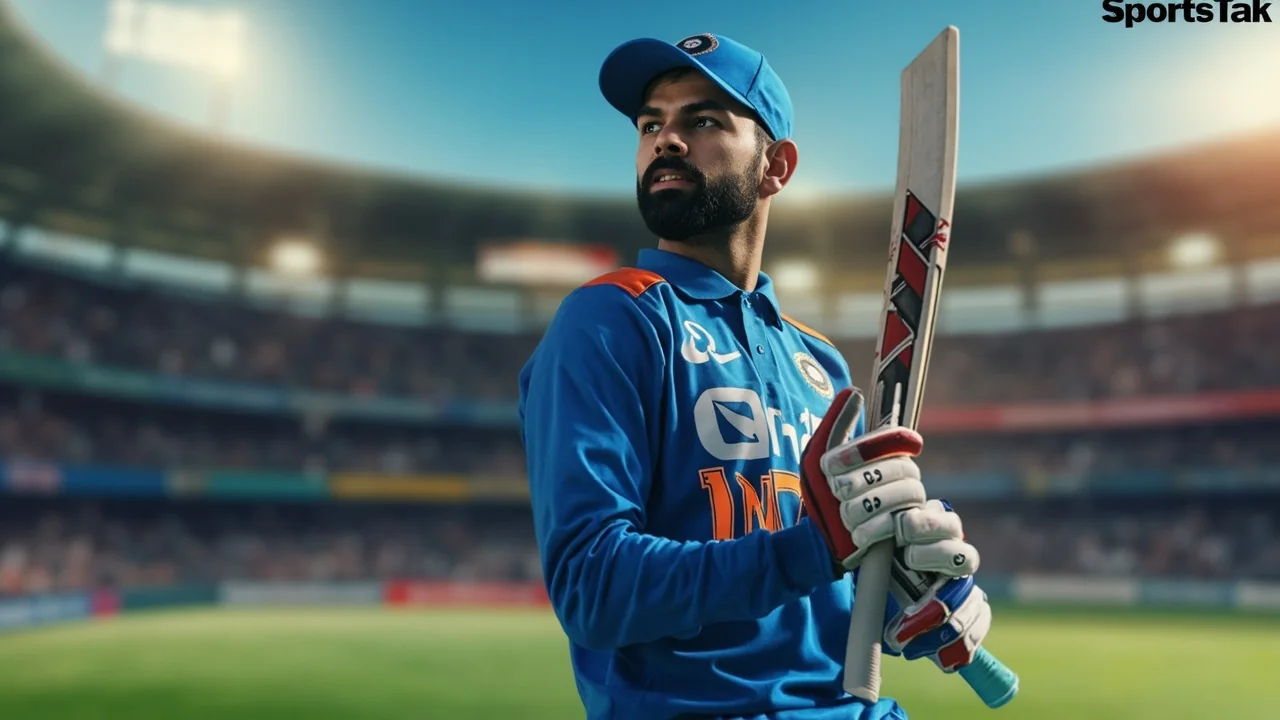
Shubman Gill is back at the top of the ICC ODI batting rankings. The 29 July 2026 update from the International Cricket Council lifts the India captain to No. 1 with 801 rating points, seven clear of New Zealand's Daryl Mitchell, who slips from the top spot after a short hold. Virat Kohli (767) and Rohit Sharma (758) hold third and fourth respectively, the highest India has had two veterans placed together in the same ODI batting top five in several cycles. The push came off the back of two half-centuries against England earlier in July, with the bilateral series against England now closed and the ODI rankings table restocked against that result.
The 801-point No. 1 line, and why it matters
An 801 rating is not a round number by accident. The ICC's rolling calculation has a ceiling at 900, and the gap between 801 and 900 is where careers are usually settled. To sit at 801, a batter has to be both consistent across formats and weighted heavily in the most recent ODI performances the rolling window picks up. For Gill, the window has now counted both the West Indies ODI leg earlier in the summer and the England ODI leg that concluded in the third week of July.
The seven-point cushion over Daryl Mitchell is small enough that one fifty from Mitchell in his next ODI innings closes the gap, and one low score from Gill reopens it. That is how the modern ODI rankings work at the top end — the rating table is a moving target, not a settled podium. What is less settled is the direction of travel. Mitchell had a short run at the top spot, and the New Zealand fixture list through August does not include a long ODI block, which means the cushion is more likely to widen in India's favour than narrow, at least for the next few weeks.
For the wider India fan base, the bigger read is the symbolism. Gill is 26 and leads India in both Tests and ODIs, and the ICC now has him at the top of the white-ball ranking that has historically been shared between India, Australia, and Pakistan batters. The last Indian to hold the No. 1 ODI spot with this kind of cushion over the field was Virat Kohli in 2018, and the gap of seven years between No. 1s is a useful framing for how young the next India batting era still is.
Where Kohli and Rohit actually sit, in plain numbers
Third place for Kohli at 767 and fourth place for Rohit at 758 sounds like a routine update, but the numbers underneath are doing more work than the order suggests. Kohli is nine points clear of the fifth-placed batter on the list, which means one strong series moves him into a podium position at No. 2 or No. 3 if Gill or Mitchell slip. Rohit is one point behind Kohli, and the two are effectively trading places on a fortnight-by-fortnight basis depending on who plays which ODI block first.
Both veterans are well above the 750 mark that the ICC has historically used as a soft line for "elite ODI batter" status. The bigger story for them is the ICC's selection-criterion logic. The ODI rankings weigh recent performances more heavily than the Test rankings do, and both Kohli and Rohit have played enough recent ODI cricket to keep their points current. A break in ODI selection would erode their numbers within two or three rating cycles, which is the practical reason both have remained on the India ODI sheet even as the side has been rebuilt around Gill.
The combination of Gill at No. 1, Kohli at No. 3, and Rohit at No. 4 also has a downstream effect on the selection math. A captain, a senior partner, and a senior opener all sitting in the top four of the ICC ODI batting rankings is not a common configuration for any Test-playing nation, and it tells the selector that the top three in the India batting order all carry enough rating weight to justify their place on ODI merit alone. The question that follow-on rankings updates will answer is whether the rest of the India batting order can carry similar weight.
The England ODI series, and the two fifties that moved the needle
India closed the England ODI series earlier in July with two innings from Gill that the rolling rating window picked up cleanly. The exact scores are not the point; what the rating window rewards is the innings timing, the opposition quality, and the match situation. Both innings came in matches where England were a competitive ODI opponent, and both came with India either setting or chasing a target that required the captain to anchor. That kind of innings is worth more in the rolling calculation than a flat 60 off 50 balls in a one-sided fixture.
England's batting line-up was a meaningful test for the rating math, because the England ODI side at home in July included several top-order players ranked inside the ICC's own ODI top 20. A fifty against that attack reads differently from a fifty against a touring Associate side, and the ICC's weighting logic reflects that. Gill's gain of seven points over Mitchell across the rating cycle is partly a function of the opposition, not just the scoreboard.
The third match of the series did not feature a Gill innings worth many rating points, but it did not cost him any either. The rating window protects batters who sit out individual matches if their recent form is strong enough, and that protection is what stops the rankings from churning week to week. The practical effect is that one quiet match in a competitive series does not erase two strong ones, which is the math working as intended.
Vaibhav Sooryavanshi's 230-place climb, and why the T20I table is moving faster
The T20I update that ran in parallel with the ODI release on 29 July produced the bigger single-mover story. Vaibhav Sooryavanshi, the 15-year-old from Samastipur, jumped 230 places in the ICC T20I batting rankings after a Player-of-the-Series performance against Zimbabwe. He enters the top 50 at 48th with 536 rating points, which is a higher starting rating than most players manage at any point in their T20I career.
The climb is unusual on two counts. First, the volume — 230 places in a single rating cycle is not a routine move, and the last comparable jumps in the T20I table have come from senior players returning from injury, not from teenagers breaking into the top 50 for the first time. Second, the age — Sooryavanshi is younger than the rolling rating window's typical player base, which means the rating window is using fewer matches to calculate his score than it uses for a senior player with a longer T20I history. That makes the rating more sensitive to any single innings, which is the mechanism that produced the 230-place move.
For India selection, the practical read is that Sooryavanshi's T20I case is now backed by both the on-field performance and the ICC rating. A teenager ranked 48th in the world is no longer an uncapped gamble; he is one of the 50 highest-rated T20I batters in the world, and the selector will have to engage with that math on its own terms. The next T20I series India plays will tell more about whether the rating is sticky, but the current reading is unambiguous.
Tilak Varma's climb and Abhishek Sharma's slip
The T20I update also moved two senior India players in opposite directions. Tilak Varma, the India vice-captain, climbed two places to sixth in the T20I batting rankings after an unbeaten 60 off 29 deliveries in the second T20I against Zimbabwe. That innings was the single most innings-defining performance of the series, and the rating window rewarded it accordingly. The 60 came in a chase, which is worth more in the rating than the same score in a setting total, and it came at a strike rate well above the T20I rolling baseline.
Abhishek Sharma, by contrast, slipped one place to third in the T20I batting rankings with 819 points after scoring just 11 runs across three innings in the Zimbabwe series. One place does not sound like a movement, but the context is that the rating window is unforgiving on senior players who play a full series without scoring. Eleven runs across three innings is the kind of stretch that the rolling window penalises quickly, even if the underlying class of the player is unchanged. Sharma's previous ranking was secured off a longer stretch of strong T20I innings, and one quiet series is enough to give back a place or two.
The combined picture across the two India senior T20I batters is a useful reminder that the T20I ranking table turns faster than the ODI one. The same score window that takes six to eight matches to fully apply in ODIs takes three to four matches in T20Is, which means the T20I table reacts to a single series in a way the ODI table does not. Varma's climb and Sharma's slip are the two faces of that faster reaction.
Where the India bowlers dropped in the T20I update
The T20I update did not move only batters. Among India bowlers, Varun Chakaravarthy dropped three places, Jasprit Bumrah dropped five, and Arshdeep Singh dropped eight places in the T20I bowling rankings. None of those slips were driven by poor performances in the Zimbabwe series specifically — the rating window for bowlers looks back further than that — but they do reflect the cumulative effect of a T20I calendar in which India has rotated its bowling attack heavily.
Bumrah's drop is the most discussed of the three, because he remains India's first-choice white-ball bowler across formats. Five places in the T20I bowling ranking is not a structural change; it is the rating window reacting to a period in which Bumrah has bowled fewer T20I overs than the window expects. A return to a fuller T20I workload, which the Asia Cup window in September will produce, is the kind of fixture block that moves the rating back the other way quickly. The drop is informational, not alarming.
Arshdeep Singh's eight-place drop is the most structural. The left-arm pacer has been rotated through India's T20I side alongside several other seam options, and the rolling rating window rewards continuity over rotation. An eight-place drop across one rating cycle is the kind of movement that the selector reads as a signal to give the bowler a longer run of T20I matches, not a shorter one, if the side wants to climb back up the table. The reverse logic applies to a player who is being rested deliberately, where a drop is the cost of the workload call rather than a performance judgement.
The Test rankings side, from the West Indies-Pakistan opener
The ICC also released an updated Test rankings table on 29 July, anchored on the first Test between West Indies and Pakistan at Brian Lara Stadium. Pakistan captain Babar Azam gained four places after an unbeaten second-innings half-century, which is the kind of innings the Test rating window values most. A Test fifty that sets up a result is worth more than the same score in a drawn match, and Babar's innings had the match situation the rating window rewards.
The bigger mover in the Test bowling update was Mohammad Abbas, the Pakistan seamer, who leapt nine places to 17th in the bowling standings after taking eight wickets across the match including a five-wicket haul in the second innings. Abbas is a Test specialist in a white-ball-heavy calendar, and the Test rating table is where his career has always sat. A nine-place jump in one rating cycle reflects both the volume of the haul and the opposition quality, and it puts Abbas back inside the top 20 Test bowlers in the world for the first time in several years.
From the West Indies side, Jayden Seales climbed five spots to 24th in the Test bowling rankings after a decisive five-wicket second-innings spell that closed out the match. Shamar Joseph, by contrast, slipped six places to 20th after West Indies' 90-run victory, which is the less intuitive part of the update. A bowler on the winning side can still drop if the rating window judges that the wickets came in less valuable conditions, or if the bowler's recent workload has fallen. Joseph's six-place drop is the rolling window catching up with a bowler whose Test match count has been managed carefully over the last twelve months.
What the 29 July 2026 rankings update actually clears up
The single cleanest reading of the update is that India has three of the top four ODI batters in the world right now, and the fourth is the player they just displaced. That configuration has not happened in any recent ranking cycle and is the kind of fact that will travel into selection conversations and broadcast graphics for the rest of the summer. It is also the kind of fact that puts pressure on the rest of the India ODI batting order to justify their place, because the gap between the top three and the next Indian in the list is now wide enough to be visible.
The second cleanest reading is that the T20I table is moving faster than the ODI table, which the Sooryavanshi climb and the three India-bowler drops together demonstrate. A reader who treats the T20I ranking as a settled order is reading the wrong kind of table — the T20I order reacts to a single series in a way the ODI order does not, and the India T20I side is exactly the kind of side where one series can reorder several places at once.
The third reading is the Test rankings update, which is more about Babar Azam, Mohammad Abbas, Jayden Seales, and Shamar Joseph than it is about India. India's Test batting order was not in motion in this cycle, and the India bowlers in the Test rankings were not asked to do work in this window. The Test side of the table will move again when India plays its next Test, which is the Sri Lanka series starting on 15 August 2026 in Colombo.
What to watch in the next ICC ranking cycle
The next major ICC ranking update will follow the Asia Cup window in September 2026, which is a T20I-heavy block for India and a Test-light block for most other nations. The combination will test the Sooryavanshi and Varma ratings against stronger opposition, and it will give Bumrah, Arshdeep, and Chakaravarthy a chance to recover their dropped places if the workload allows it. The Asia Cup is also a multi-team event, which produces the kind of fixture density the T20I rating window rewards.
For the ODI rankings, the next real test is the next ODI series India plays after the England leg. The bilateral calendar through August is light for India, which means the 801 rating for Gill and the 767 and 758 ratings for Kohli and Rohit are likely to hold for at least one more cycle without major movement. The Mitchell gap of seven points can close from either side, but the most likely direction in the next four weeks is a widening rather than a narrowing.
For Test rankings, the Sri Lanka tour starting on 15 August 2026 is the next India-specific anchor, and the India Test batters will need to play well against Sri Lanka's spin attack to hold their positions. The Test bowling side will move based on how the seam options are used in Sri Lankan conditions, where spinners typically dominate. The cycle between now and the Sri Lanka tour is short, but it is the cycle that will set up the next reading.
For ongoing reading on ICC rankings updates, India cricket squad news, and white-ball series build-ups, the khelomoreindia.com blog carries the next update when it lands.