Benefits of Sports for Child Development: 2026 Guide
Discover the benefits of sports for child development in 2026. Boost your child's grades, health, and confidence with our guide to balancing academics and play.

What if the secret to your child's higher grades isn't more tuition, but an hour on the football field? In 2026, many Indian parents feel stuck between the pressure of competitive exams and the reality of rising screen addiction. You likely want your child to be healthy and confident, but the fear of falling behind in school often keeps them indoors. Understanding the benefits of sports for child development is the first step toward breaking this cycle and helping your child excel in every area of life.
We know that balancing a heavy syllabus with physical activity feels like a constant struggle. However, organized sports don't take away from learning; they actually provide the discipline and focus needed to master it. In this guide, you'll discover how regular play transforms physical health, builds mental resilience, and sharpens social skills. We will show you how to integrate sports into a busy schedule so your child gains the immunity and confidence required to navigate today's high-pressure world.
Key Takeaways
- Learn how organized play combats the "sedentary epidemic" by building essential motor skills and bone density during critical growth years.
- Discover how to foster "grit" and mental resilience, helping your child view setbacks as opportunities for growth rather than failures.
- Uncover the science-backed link between physical activity and academic success, where improved brain blood flow leads to sharper concentration.
- See how the benefits of sports for child development include mastering time management, allowing student-athletes to balance rigorous studies with active play.
- Get a practical roadmap for choosing the right sport and vetting academies based on coach-to-student ratios and safety protocols.
Why Sports are Critical for Child Development in 2026
In 2026, we're seeing a fundamental shift in how families approach playtime. It's no longer just about burning off energy; it's about reaching developmental milestones that set the stage for a successful life. Sports development is a holistic process that integrates physical, cognitive, and social-emotional growth. When you look at the Benefits of youth sports, it's clear that the impact reaches far beyond the scoreboard. It's about building "Physical Literacy," which is the confidence and competence to move your body for a lifetime.
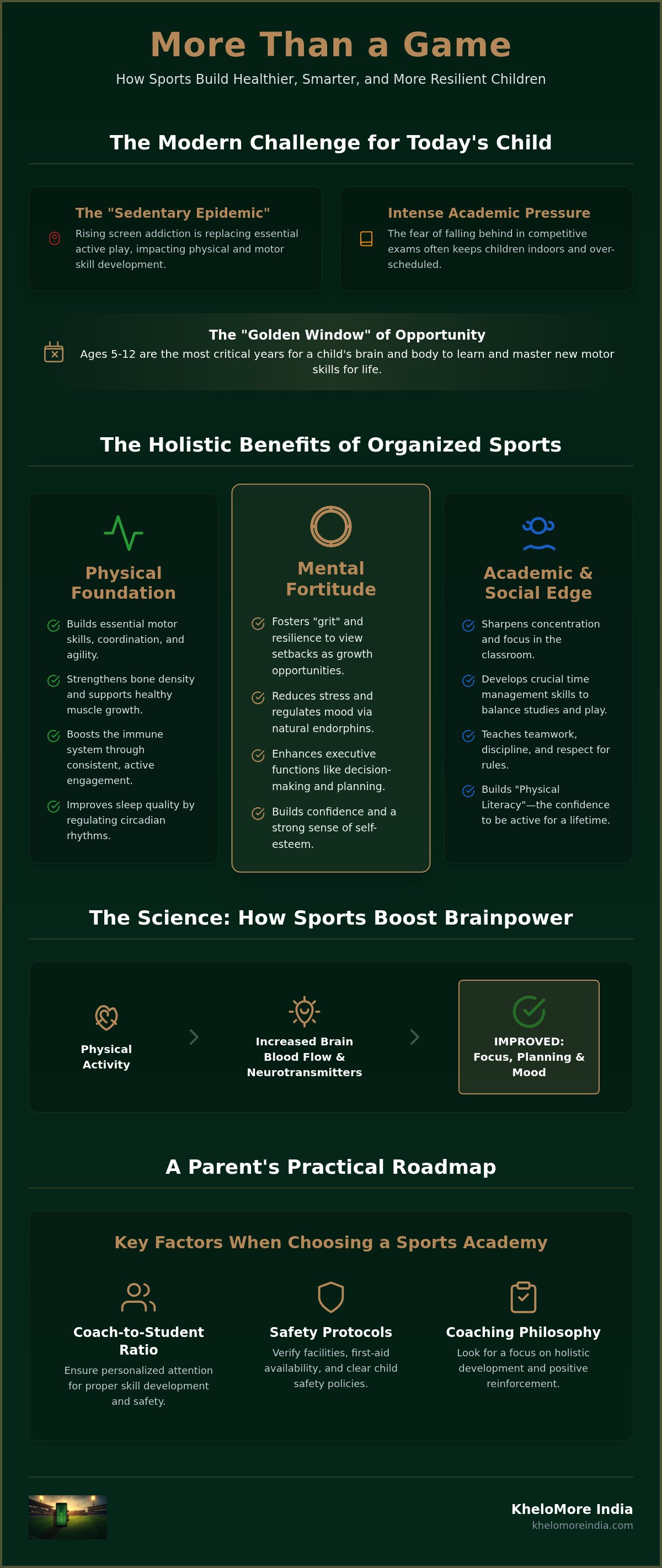
The current year brings unique challenges, specifically a "sedentary epidemic" fueled by high digital consumption. With children spending more time in virtual spaces, the physical world can feel secondary. This is why the window between ages 5 and 12 is so vital. This "golden window" is when a child's brain and body are most receptive to learning new motor skills. Missing this phase makes it harder to develop agility and coordination later in life. Understanding the benefits of sports for child development helps you prioritize these active hours over extra screen time.
Physical vs. Mental Development: A Dual Approach
Physical movement does more than build muscle; it changes the brain's chemistry. When your child runs, jumps, or kicks a ball, their body releases neurotransmitters like endorphins and serotonin. These natural chemicals are essential for mood regulation and reducing the stress that often comes with modern school life.
Regular participation in organized sports also stimulates the prefrontal cortex. This is the part of the brain responsible for executive functions like decision making, impulse control, and planning. By choosing a sport, you're giving your child a mental workout that improves their ability to think on their feet. Holistic development through active play means nurturing a child's physical strength, emotional intelligence, and cognitive sharpness all at once.
Breaking the Sedentary Cycle
Organized sports provide a necessary, structured environment for screen-free time. In a world where digital distractions are everywhere, having a dedicated hour on the field ensures your child remains grounded in the physical world. This structure is key to building cardiovascular health and a robust immune system, which is more important than ever.
The transition from unstructured play to disciplined sports is a major milestone. While running around a park is great, the benefits of sports for child development truly shine when there's a coach, a set of rules, and a goal. This shift teaches children how to follow instructions and work within a framework. It moves them from simply being "active" to being "athletes" who understand the value of practice and persistence.
- Structured Activity: Replaces passive screen time with active engagement.
- Immunity Boost: Strengthens the body's natural defenses through consistent exercise.
- Skill Progression: Moves children from basic movements to complex athletic techniques.
Building the Foundation: Physical Health and Motor Skills
While we often focus on the score, the real win happens in your child's physiology. To meet the recommended 60 minutes of daily physical activity, children need more than just a quick run in the park. They need the structured movement found in organized play. One of the primary benefits of sports for child development is the mastery of gross motor skills. This includes balance, agility, and the kind of coordination that allows a child to move through the world with confidence. Whether it's pivoting on a football field or maintaining a stance in cricket, these movements build a foundation that supports all future physical activity.
During the critical years of puberty, sports play a massive role in strengthening bone density and supporting muscle growth. High-impact activities like basketball or gymnastics create healthy stress on the skeletal system, which helps bones grow denser and stronger. This period is a unique window that you can't get back once it closes. Beyond just growing taller, sports help manage weight and act as a shield against lifestyle diseases like Type 2 diabetes. The physical exertion also provides academic and cognitive benefits, as a healthy body supports a sharp mind.
When children exert themselves physically, their bodies also regulate their circadian rhythms more effectively. This leads to deeper, more restorative sleep, which is essential for growth and recovery. A well-rested child is better equipped to handle the academic demands of the following day, creating a positive cycle of health and performance.
Coordination and Agility Beyond the Field
Sports like tennis or cricket require intense hand-eye coordination. These skills don't stay on the court; they translate into daily tasks like writing, typing, or even navigating a crowded room. We also look at 'bilateral integration,' which is the ability to use both sides of the body together. Learning this early prevents injuries in adulthood by ensuring the body moves as a balanced unit. Building a strong core and flexible joints now means fewer back or knee issues in their 30s.
Long-term Health Benefits
Starting early helps establish habits that stick. A child who enjoys movement is far more likely to remain active as an adult. This consistency protects heart health and maintains a healthy metabolic rate. Sports serve as a preventative medicine for children by building physiological resilience before chronic issues can take root. If you're looking for ways to start this journey, checking out our Sports Booking Guides can help you find the right fit for your child's current skill level. Understanding the long-term benefits of sports for child development makes it easier to prioritize play in a busy schedule.
Psychological Growth: Building Resilience and Confidence
Physical health is the base, but the mental game is where the long-term transformation happens. When a child misses a penalty or loses a match, they aren't just losing a game; they're learning to handle disappointment. This quality, often called "grit," is one of the most significant benefits of sports for child development. It teaches them that a setback isn't a permanent failure but a data point for improvement. By facing these challenges early, children build a thick skin that helps them navigate the complexities of adult life.
Sports also provide a "safe failure" zone. Unlike a school exam where a bad grade might feel final, a sports match allows for immediate feedback and a chance to try again next week. This environment encourages children to take risks and learn from their mistakes without the fear of long-term consequences. It's a practical way to develop emotional regulation. Learning to stay calm when the score is tight or managing the frustration of a referee's call is a lesson in self-control that serves them well in any high-stakes situation.
In an era of social media filters, sports ground children in reality. They begin to value their bodies for what they can do, such as how fast they can run or how accurately they can throw, rather than just how they look. This shift builds a healthy self-image and a sense of "physical competence" that resists external pressure. It's a powerful antidote to the body image issues that often plague adolescents.
Confidence Through Competence
Mastering a specific skill provides an immediate psychological boost. When a child finally nails a perfect cover drive or a difficult swimming stroke, the sense of achievement is palpable. This "I can do this" attitude doesn't stay on the turf. When a child realizes they can master a complex movement through practice, they apply that same logic to a difficult math problem or a science project. This transition from the field to the classroom is a cornerstone of self-belief. The physical release also acts as a natural way to clear the mind, significantly reducing anxiety and stress.
The Power of Teamwork and Leadership
Team sports move a child from "me" to "us." They learn to trust their peers and communicate clearly when the pressure is on. This collective victory is often more rewarding than individual success because it's shared. By supporting a teammate who made a mistake, a child develops genuine empathy. They learn that leadership isn't just about being the star player; it's about lifting others up when they're down. These social skills are essential for future career success and healthy personal relationships.
The 'Sports vs. Studies' Myth: Academic and Social Advantages
Many Indian households view sports as a distraction from academic excellence. You might worry that an hour on the cricket pitch is an hour lost for math revision. However, the science suggests the exact opposite. One of the most overlooked benefits of sports for child development is how physical exertion directly fuels brain power. When a child is active, their heart rate increases, pumping more oxygen and nutrient-rich blood to the brain. This physiological boost improves memory, sharpens concentration, and prepares the mind for deep learning.
Student-athletes often outperform their peers in time management. Because their schedules are packed with practice and matches, they don't have the luxury of procrastinating. They learn to treat their study time with the same intensity they bring to the field. This "practice-results" mindset is easily applied to school exams. If a child knows that 100 serves lead to a better tennis game, they'll understand that consistent revision leads to better grades. It's about building a discipline that carries over into every aspect of their life.
Cognitive Benefits of Active Play
Complex sports like football or basketball require split-second decision making and strategic thinking. These activities aren't just physical; they're high-speed mental puzzles. Aerobic exercise is particularly effective at growing the hippocampus, which is the brain's primary center for memory and learning. Research consistently shows a positive correlation between high physical fitness levels and improved standardized test scores across core subjects. By keeping your child active, you're actually giving them a cognitive edge in the classroom.
Social Skills for the Modern World
The Social Quotient (SQ) is becoming as vital as IQ in the 2026 job market. Sports provide a unique laboratory for navigating group dynamics. On the field, children must resolve conflicts, negotiate roles, and support peers without adult intervention. They learn the unwritten rules of sportsmanship, such as how to win with grace and lose with dignity. These are lessons that a textbook simply cannot teach.
Playing in an academy also helps children build a diverse social circle outside their immediate school environment. This exposure to different personalities and backgrounds is invaluable for building empathy and communication skills. To ensure your child is in a safe and supportive environment, see our KheloMore guide to sports booking to find the right environment for your child.
Developing these soft skills early gives your child a competitive advantage that goes beyond the classroom. If you're ready to start this journey, you can download our KheloMore App Notes to learn how to evaluate local coaching standards. Understanding the full scope of the benefits of sports for child development means realizing that the field and the classroom are on the same team.
Choosing the Right Sport: A Parent's Practical Roadmap
You've seen how physical activity boosts brain power and builds social resilience. Now comes the practical part: finding the right fit. The benefits of sports for child development are only fully realized if your child actually sticks with the program. Start by looking at their personality rather than your own interests. Does your child thrive in a group environment like a cricket or football team? Or do they prefer the individual focus and quiet discipline of swimming or badminton? Choosing a sport that aligns with their temperament reduces the chance of them wanting to quit after just a few weeks.
Once you've picked a sport, vetting the academy is your next priority. Don't just look at the brand name or the proximity to your home. Check the coach-to-student ratio. A batch of 30 kids with one coach means your child won't get the technical feedback they need to improve. A trial class is your best tool here. We always recommend observing a session before you pay full fees. Watch how the coach handles mistakes. Do they encourage the kids or just shout instructions? If the environment isn't supportive, the psychological benefits will be lost to unnecessary stress.
It's also vital to balance intensity. While we want children to learn discipline, the sport should remain "fun." If it starts feeling like another high-pressure tuition class, you risk early burnout. Keep the focus on effort and progress rather than just winning trophies.
What to Check Before Enrolling
Before signing any forms, run through a quick checklist. Evaluate the coach's approach to child psychology. A coach who understands how to motivate children is far more valuable than one who only knows the technical drills. You should also check:
- Facility Standards: Is the equipment in good condition? Is there a clear first aid protocol in case of minor injuries?
- Hygiene: Are the changing rooms and playing surfaces well-maintained?
- Commitment Level: Can your child realistically manage the frequency of classes alongside their current school load?
Starting the Journey with KheloMore India
We help you bridge the gap between knowing the benefits of sports for child development and actually starting the journey. You can use the KheloMore app to compare local academies, check verified coach qualifications, and read reviews from other parents in your community. Managing your bookings and receipts digitally keeps you organized, allowing you to focus on your child's growth rather than paperwork. Our platform is designed to make the process of finding and vetting sports academies straightforward and reliable.
Explore sports classes and book a trial for your child today!
Empower Your Child’s Future Through Play
The journey from a sedentary lifestyle to an active, disciplined one starts with a single step on the field. We've explored how physical literacy builds a foundation for long-term health and how the social skills learned in a team environment prepare children for the challenges of the adult world. Perhaps most importantly, the evidence shows that play doesn't take away from study time; it actually sharpens the mind for better academic results. Realizing the full benefits of sports for child development requires moving beyond theory and into consistent action.
Choosing the right environment is the final piece of the puzzle. You need a space where safety and expert coaching are the top priorities. We provide verified coach profiles and easy trial class booking to make it simple to find a program that matches your child's unique personality. Trusted by thousands of Indian families, our platform helps you bridge the gap between knowing what's best and making it happen.
Find the best sports academies for your child on KheloMore and watch them grow into a stronger, more confident version of themselves today.
Frequently Asked Questions
What is the best age for a child to start organized sports?
Most children are ready to begin organized sports around age 6. At this stage, they've developed the basic motor skills and attention span needed to follow a coach's instructions. Before age 6, it's better to focus on unstructured play like running, jumping, and throwing to build a foundation of physical literacy without the pressure of formal rules.
How do sports improve a child's academic performance?
Physical activity increases blood flow and oxygen to the brain, which directly sharpens memory and concentration. Regular exercise also stimulates the growth of the hippocampus, the brain's learning center. This cognitive boost is a major part of the benefits of sports for child development, helping kids stay focused during long school hours and complex assignments.
Should my child focus on one sport or try multiple activities?
Children should try multiple sports until they are at least 12 years old. Playing different games, such as football for agility and swimming for endurance, helps develop a wider range of motor skills. Specializing too early often leads to repetitive strain injuries and mental burnout, whereas "multi-sport" athletes tend to be more resilient and versatile.
How can I tell if a sports coach is right for my child's temperament?
Observe a trial session to see how the coach reacts when a child makes a mistake. A coach who uses positive reinforcement is usually better for children who need a confidence boost. If your child is highly competitive, they might prefer a coach who sets clear performance targets. Always check if the coach maintains a manageable student-to-teacher ratio for personalized attention.
What are the most popular sports for kids in India right now?
Cricket remains the most popular choice, but football and badminton have seen a massive surge in 2026. Many Indian families are also enrolling children in swimming and tennis because these sports offer excellent cardiovascular benefits and can be played year-round. These activities are widely available in most urban academies and offer a great mix of individual and team discipline.
How do I balance my child's sports schedule with their school exams?
Reduce the frequency of training during exam weeks rather than stopping completely. An hour of physical play acts as a mental reset that lowers stress levels and prevents the fatigue of long study sessions. Using a weekly planner to block out specific times for both "active play" and "focused study" helps your child learn essential time management skills early on.
What should I do if my child wants to quit a sport they just started?
Ask them to finish the current month or season before they make a final decision. This teaches them to honor their commitments while giving them enough time to get past the initial "learning curve" frustration. If they still want to quit after the term ends, try to find out if they dislike the sport itself or just the specific environment or coaching style.
Are individual sports better than team sports for building confidence?
Neither is strictly "better," as they build confidence in different ways. Team sports foster social confidence through peer support and collective goals, while individual sports like gymnastics or tennis build self-reliance and internal drive. Choosing the right format depends on your child's personality and is a core part of maximizing the benefits of sports for child development.
Common questions
What is the best age for a child to start organized sports?
Most children are ready to begin organized sports around age 6. At this stage, they've developed the basic motor skills and attention span needed to follow a coach's instructions. Before age 6, it's better to focus on unstructured play like running, jumping, and throwing to build a foundation of physical literacy without the pressure of formal rules.
How do sports improve a child's academic performance?
Physical activity increases blood flow and oxygen to the brain, which directly sharpens memory and concentration. Regular exercise also stimulates the growth of the hippocampus, the brain's learning center. This cognitive boost is a major part of the benefits of sports for child development, helping kids stay focused during long school hours and complex assignments.
Should my child focus on one sport or try multiple activities?
Children should try multiple sports until they are at least 12 years old. Playing different games, such as football for agility and swimming for endurance, helps develop a wider range of motor skills. Specializing too early often leads to repetitive strain injuries and mental burnout, whereas "multi-sport" athletes tend to be more resilient and versatile.
How can I tell if a sports coach is right for my child's temperament?
Observe a trial session to see how the coach reacts when a child makes a mistake. A coach who uses positive reinforcement is usually better for children who need a confidence boost. If your child is highly competitive, they might prefer a coach who sets clear performance targets. Always check if the coach maintains a manageable student-to-teacher ratio for personalized attention.
What are the most popular sports for kids in India right now?
Cricket remains the most popular choice, but football and badminton have seen a massive surge in 2026. Many Indian families are also enrolling children in swimming and tennis because these sports offer excellent cardiovascular benefits and can be played year-round. These activities are widely available in most urban academies and offer a great mix of individual and team discipline.
How do I balance my child's sports schedule with their school exams?
Reduce the frequency of training during exam weeks rather than stopping completely. An hour of physical play acts as a mental reset that lowers stress levels and prevents the fatigue of long study sessions. Using a weekly planner to block out specific times for both "active play" and "focused study" helps your child learn essential time management skills early on.
What should I do if my child wants to quit a sport they just started?
Ask them to finish the current month or season before they make a final decision. This teaches them to honor their commitments while giving them enough time to get past the initial "learning curve" frustration. If they still want to quit after the term ends, try to find out if they dislike the sport itself or just the specific environment or coaching style.
Are individual sports better than team sports for building confidence?
Neither is strictly "better," as they build confidence in different ways. Team sports foster social confidence through peer support and collective goals, while individual sports like gymnastics or tennis build self-reliance and internal drive. Choosing the right format depends on your child's personality and is a core part of maximizing the benefits of sports for child development.