2026 Guide: Parental Involvement in Indian Youth Sports
Discover the right way to support your child athlete in India. Our 2026 guide on parental involvement in youth sports helps you balance pressure and support.

What if your child's success on the football pitch or badminton court has less to do with their extra practice and more to do with how you handle the car ride home? As India pushes toward its goal of becoming a top ten sporting nation by 2036, the pressure on young athletes is at an all-time high. Most parents today feel the intense struggle of balancing heavy academic schedules with the demand for athletic excellence. You want the best for your child, but it's easy to accidentally cross the line from a supportive fan to an overbearing coach.
Effective parental involvement in youth sports isn't about pushing harder; it's about becoming a "Chief Logistics Officer" and a steady emotional anchor. This 2026 guide will help you discover how to balance support and pressure to maximize the developmental benefits of sports for your child. You'll learn to identify high-quality coaching, manage the emotional roller coaster of competition, and use tools from KheloMore India to handle the logistics. We'll preview the latest government initiatives and provide a roadmap for building a healthy, resilient athlete while strengthening your parent-child relationship.
Key Takeaways
- Learn how to balance the "Youth Sports Triangle" to ensure your child receives the right mix of emotional and logistical support.
- Explore the direct link between consistent physical activity and improved academic focus for children facing heavy school schedules.
- Master the art of the "car ride home" to maintain healthy parental involvement in youth sports without creating unnecessary pressure.
- Get practical tips on selecting the right academy by evaluating coach-to-student ratios and using digital tools for seamless bookings.
- Understand how sports participation builds the resilience and discipline required for your child to thrive in the future workforce.
The Role of Parental Involvement in Youth Sports
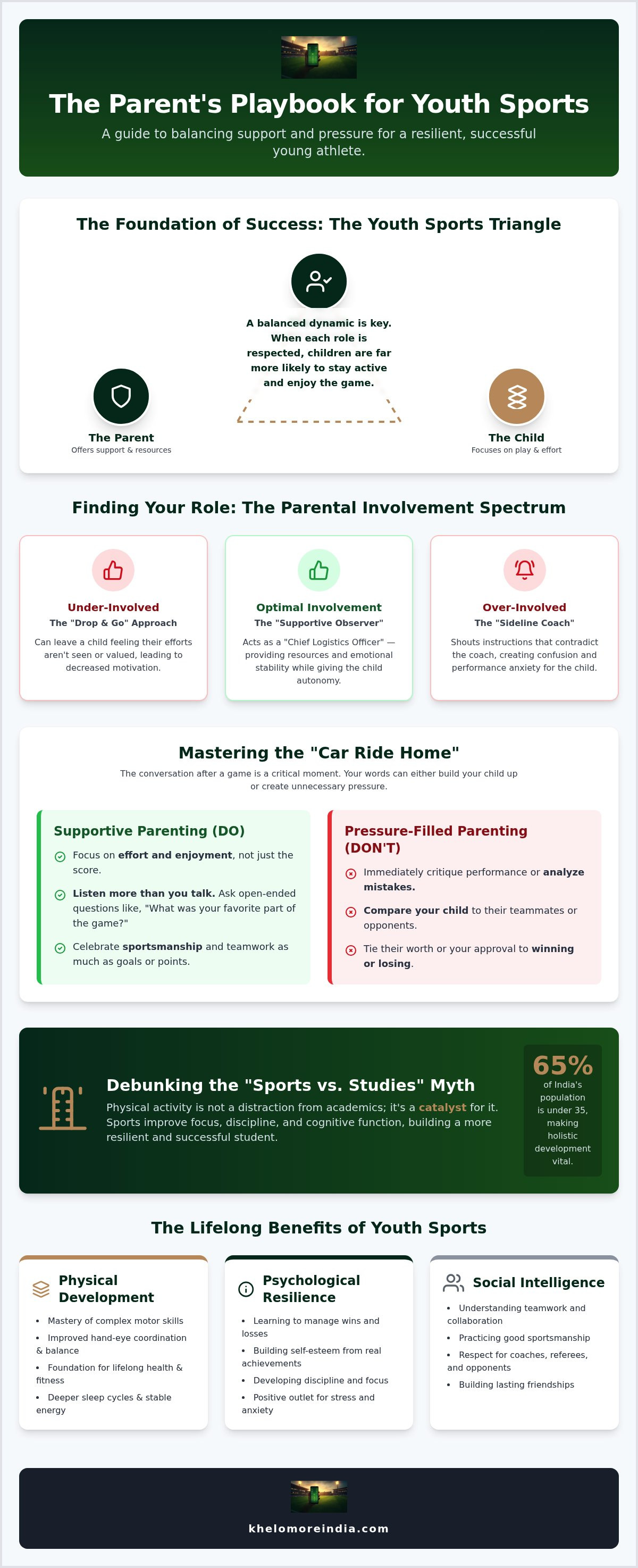
Parental involvement in youth sports represents the full spectrum of emotional, financial, and logistical support you provide to your child. It's more than just paying for gear or driving to practice; it's about creating a foundation where a young athlete feels safe to explore their potential. In 2026, the focus has shifted toward being a "supportive observer" rather than a secondary coach. This shift is essential for maintaining the "Youth Sports Triangle," which is the critical dynamic between the parent, the coach, and the child. For a comprehensive Youth sports overview, research indicates that when this triangle is balanced, children are far more likely to stay active into adulthood.
This year is defined by "Active but Not Intrusive" parenting. As India professionalizes its sports governance through the National Sports Governance Rules of 2026, families are learning to value the process over the final score. Instead of focusing solely on trophies, parents are now prioritizing skill acquisition, social development, and physical literacy. This process-oriented approach reduces the anxiety children often feel when they believe their worth is tied to winning, allowing them to truly enjoy the game.
Levels of Involvement: Where Do You Fit?
Finding the right balance is the most common challenge for Indian families. Some parents fall into the "under-involved" category, often using a "drop and go" approach that can leave a child feeling their efforts aren't valued. Others become "over-involved," acting as sideline coaches who shout instructions that often contradict the actual training. Optimal parental involvement in youth sports acts as scaffolding. You provide the necessary structure and resources, such as using KheloMore India to manage academy selections, while giving your child the autonomy to own their successes and failures on the field.
Cultural Context: Sports in the Indian Family
The traditional "Sports vs. Studies" myth is finally being dismantled by modern developmental data. We now understand that physical activity isn't a distraction from academics; it's a catalyst for it. With approximately 65% of India's population under the age of 35, sports have become a vital tool for holistic development. Beyond the physical benefits, sports provide a necessary break from digital screen time and help children develop the "soft skills" now required in school assessments. By viewing sports as an essential part of a child's education, families are helping build a more resilient and focused generation.
The Benefits of Sports for Child Development
While the previous section explored the changing role of parents, it's equally important to understand the specific developmental gains your child achieves through consistent play. In the Indian context, sports are often the first place a child learns to manage high-stakes environments outside the classroom. Healthy parental involvement in youth sports ensures that these experiences remain positive and constructive. Rather than being a distraction, athletic participation serves as a cognitive "reset" that helps children return to their studies with renewed focus and clarity.
Physical and Motor Skill Mastery
Physical literacy is the foundation for lifelong health. Beyond just "staying fit," sports help children master complex motor skills like hand-eye coordination, balance, and spatial awareness. These skills are particularly vital today, as they counteract the physical stagnation caused by long school hours and digital entertainment. Regular activity also leads to deeper sleep cycles and more stable energy levels throughout the day. According to an NIH study on parental support and pressure in youth sports, children who perceive their parents as supportive rather than controlling show higher levels of physical competence and a greater desire to remain active as they age.
Psychological and Social Impact
The field is a laboratory for social skills. Here, children learn the "unwritten rules" of sportsmanship, such as how to disagree with a referee's call respectfully or how to encourage a teammate who is struggling. These interactions build a level of social intelligence that is difficult to replicate in a purely academic setting. parental involvement in youth sports plays a key role here by reinforcing these values at home. When you celebrate a child’s willingness to pass the ball or their discipline in training, you are helping them build self-esteem through incremental, real-world achievements.
This emotional resilience is perhaps the most lasting benefit. Learning to deal with a loss or a personal mistake helps children develop a growth mindset, which is the belief that abilities can be developed through dedication and hard work. This resilience prepares them for the pressures of competitive exams and future professional challenges. If you're ready to find a structured environment where your child can develop these skills, exploring our Sports Booking Guides is a great way to start your search for the right academy.
Supportive vs. Pressure-Filled Parenting
It's easy to spot the red flags of high-pressure parenting from the sidelines. You might see a parent pacing the boundary line, shouting instructions that contradict the coach, or visibly sagging after a missed goal. This behavior sends a clear message: your support is tied to the scoreboard. In contrast, healthy parental involvement in youth sports focuses on being a steady anchor. If you find yourself more stressed about the match than your child is, it's time to step back. High pressure often leads to burnout, while support leads to longevity.
The car ride home is perhaps the most critical window for emotional support. For many young athletes, this is the time they dread most because it usually involves a play-by-play critique of their mistakes. Instead, try using this time to listen. A Clemson University study on parental involvement highlights that children value autonomy and emotional safety over technical advice from their parents. If they want to talk about the game, let them lead. If not, talk about what's for dinner. This simple shift preserves the joy of the game.
One common objection from Indian parents is the fear that a lack of "pushing" results in a lack of success. You might worry that if you don't point out every flaw, your child won't improve. The truth is that children are usually their own harshest critics. By praising effort, discipline, and sportsmanship over the final outcome, you foster a growth mindset. Success in 2026 isn't just about winning; it's about building the resilience to keep playing. If you're stressed about the logistics of the season, our KheloMore App Notes can help you manage the schedule so you can stay focused on being a fan.
Communicating with Your Young Athlete
The most powerful sentence you can say to your child is: "I love to watch you play." It removes the pressure of performance and reinforces that your support is unconditional. When discussing the game, ask open-ended questions like, "What was your favorite part of the match today?" rather than "Why did you miss that shot?" Managing your own emotions is also key. If you stay calm during high-stakes moments, your child is more likely to stay composed on the field.
Respecting the Coach's Domain
Double coaching is a major source of confusion for kids. When a coach says "pass" and a parent yells "shoot," the child often freezes. Respecting the academy's training structure is vital for your child's development. If you have concerns about playing time or coaching style, address them professionally and privately with the coach. Never undermine their authority in front of the child. Supporting the academy’s discipline helps your child learn to respect authority and follow a collective team strategy.
Practical Ways to Manage Your Child's Sports Journey
Being a sports parent in 2026 is a logistical challenge. Between school projects, coaching sessions, and family time, your calendar can quickly become a source of stress. Effective parental involvement in youth sports requires you to streamline the 'admin' side of the journey. When you handle the logistics efficiently, you're less likely to feel frustrated on the sidelines. This allows you to stay focused on being the emotional anchor your child needs.
Follow these steps to manage the journey without the burnout:
- Step 1: Audit the Academy. Don't just pick the closest center. Check coach-to-student ratios. A high-quality academy should ideally have one coach for every 10 to 12 students to ensure individual attention.
- Step 2: Go Digital. Use tools to track bookings and preferences. Keeping all your receipts and schedules in one place prevents last-minute panic.
- Step 3: Protect Rest Time. With the 2026-27 sports budget hitting ₹4,479.88 crore, there are more tournaments than ever. You must ensure your child has at least one full day of rest per week to prevent injury.
- Step 4: Smart Gear Investment. The government's ₹500 crore initiative for sports goods manufacturing means high-quality Indian-made gear is more accessible. Don't buy professional-grade equipment until your child has committed to the sport for at least a year.
Evaluating Sports Academies and Coaches
A trial class is your best window into an academy's culture. Watch for safety protocols and how the coach engages with less-skilled players. Coaching for an eight-year-old should look very different from coaching a teenager. In 2026, age-appropriate techniques are the gold standard. You can use platforms like KheloMore to compare local options based on verified parent reviews, ensuring you find a fit that matches your child's personality and skill level.
Managing the 'Sports Admin' Stress
Logistics shouldn't take over your life. Coordination is key. Reach out to other parents for carpooling to save time and fuel. Most importantly, stay informed about cancellation policies and academy updates. If you want to simplify this process, our KheloMore App Notes provide a clear breakdown of how to manage your preferences and receipts digitally. By automating the boring parts, you can spend more time enjoying the game from the stands.
The Long-Term Impact of Sports on Youth Success
The true value of sports isn't measured in childhood trophies but in the type of adult your child becomes. By the time your child enters the workforce, the technical rules of the game might be forgotten, but the character built during those Saturday morning matches will remain. Consistent parental involvement in youth sports provides the safety net required for children to take risks and develop the "soft skills" that the 2026 job market demands. Employers today look for more than just degrees; they look for the grit and teamwork that only comes from years of practice and competition.
Resilience is perhaps the greatest professional asset a young athlete gains. When a child learns to bounce back from a tough loss or a benching, they are practicing for adult challenges like missed promotions or failed projects. Sports resilience helps children navigate adult challenges by teaching them that effort and persistence are more important than any single setback. This mindset creates a lifelong habit of wellness, ensuring they prioritize their physical and mental health even in high pressure environments.
From the Field to the Boardroom
Teamwork on the pitch translates directly into professional collaboration skills. In a team environment, children learn to put collective goals above personal glory, a trait that is essential in modern corporate structures. They also learn how to handle feedback and criticism constructively. Instead of taking a coach's correction personally, they learn to view it as a tool for improvement. This ability to accept and implement feedback is what separates successful professionals from the rest. Your role is to reinforce these lessons by focusing on how they interacted with their teammates rather than just their individual stats.
Next Steps for Your Family
As you look toward the future, encourage your child to try multiple sports before specializing. Sampling different activities prevents burnout and builds a wider range of motor skills. It also keeps the experience fresh and fun. Your goal is to make sports a family value rather than a chore on a checklist. When you participate in active outings or show genuine interest in their progress, you're building a foundation of confidence. Balanced parental involvement in youth sports is a long-term investment in your child's future. Start your journey by reading the KheloMore: The Ultimate 2026 Guide to Sports Booking in India to find the best environment for your child to grow.
Empowering Your Child's Sporting Future
Building a legacy of health and confidence starts with the choices you make today. You've seen how balancing support with independence allows your child to thrive both on the field and in the classroom. By focusing on the process rather than just the final score, you're giving them the tools to handle adult challenges with resilience and grit. Sports are no longer just an extracurricular activity; they're a training ground for life in 2026 and beyond.
Effective parental involvement in youth sports is easiest when you don't have to worry about the "admin" side of the game. You can Find the perfect sports academy for your child on KheloMore India to simplify your journey. Our platform serves as a trusted resource for Indian sporting families, allowing you to compare academies based on coach ratios and timing while managing all your sports bookings in one easy app.
Your support is the foundation of their success. When you handle the logistics efficiently and stay as their biggest fan, you're helping them become a confident, disciplined adult. Let's get them on the field and watch them grow into the champions they're meant to be.
Frequently Asked Questions
What are the primary benefits of sports for child development?
The primary benefits of sports for child development include improved physical health, enhanced motor skills, and better cognitive focus for academic tasks. Beyond physical fitness, children learn teamwork, leadership, and conflict resolution. These activities help combat sedentary lifestyles and build emotional resilience. By engaging in sports, your child develops a growth mindset that allows them to view failures as learning opportunities, which is essential for success in the 2026 job market.
How much parental involvement is considered 'too much' in youth sports?
Parental involvement in youth sports is considered excessive when you start coaching from the sidelines or when your emotional state depends on the match result. If your child feels anxious about the car ride home because of impending critiques, you've likely crossed the line. Too much pressure often leads to athlete burnout and a loss of interest in the game. It's better to act as a supportive anchor rather than a secondary technical instructor.
Can sports impact a child's academic performance in India?
Yes, sports significantly improve academic performance by boosting concentration and discipline in Indian students facing heavy school schedules. Physical activity increases blood flow to the brain and provides a necessary mental break from long study hours. Many families find that children who play sports manage their time more efficiently and handle exam stress better. Instead of spoiling education, regular play serves as a vital tool for holistic developmental success.
How do I choose the right sports academy for my child's age?
You should choose a sports academy by evaluating coach-to-student ratios and ensuring they use age-appropriate coaching techniques. For younger children, the focus should be on fun and motor skill mastery rather than intense competition. Look for academies that maintain a ratio of one coach for every 10 to 12 students to ensure your child gets enough attention. Checking verified parent reviews on digital platforms can help you compare local options accurately before committing.
What should I say to my child after they lose a big game?
The best thing to say to your child after a loss is "I love to watch you play" to reinforce that your support is unconditional. Avoid critiquing their performance immediately after the game when emotions are still high. Instead, ask open-ended questions like "What was the most challenging part of the match today?" This approach shifts the focus from the final score to the effort they put in and the lessons they learned on the field.
Is it better for a child to specialize in one sport or play many?
It's generally better for children to play multiple sports before specializing to prevent burnout and develop a wider range of physical skills. Specializing too early can lead to overuse injuries and a lack of interest by the time they reach their teens. Trying different activities helps them discover what they truly enjoy while building diverse motor skills. This variety keeps the sporting experience fresh and prevents the pressure associated with early professionalization.
How can I manage the costs of sports coaching and equipment?
You can manage costs by investing in high-quality Indian-made equipment and using digital tools to track your booking expenses. With the government's ₹500 crore initiative to promote domestic sports goods manufacturing, quality gear is now more affordable. Don't feel pressured to buy professional-grade equipment for a beginner. Instead, focus on the basics and use platforms that allow you to compare academy fees and schedules to find the best value for your family.
How do I know if my child is experiencing sports burnout?
You'll know your child is experiencing burnout if they show a sudden loss of interest in practice or display persistent fatigue and mood changes. Healthy parental involvement in youth sports involves watching for these signs and ensuring they have at least one full day of rest per week. If a child begins making excuses to skip sessions or seems unusually stressed about competition, it's time to step back and re-evaluate their schedule.
Common questions
Levels of Involvement: Where Do You Fit?
Finding the right balance is the most common challenge for Indian families. Some parents fall into the "under-involved" category, often using a "drop and go" approach that can leave a child feeling their efforts aren't valued. Others become "over-involved," acting as sideline coaches who shout instructions that often contradict the actual training. Optimal parental involvement in youth sports acts as scaffolding. You provide the necessary structure and resources, such as using KheloMore India to manage academy selections, while giving your child the autonomy to own their successes and failures on the field.
What are the primary benefits of sports for child development?
The primary benefits of sports for child development include improved physical health, enhanced motor skills, and better cognitive focus for academic tasks. Beyond physical fitness, children learn teamwork, leadership, and conflict resolution. These activities help combat sedentary lifestyles and build emotional resilience. By engaging in sports, your child develops a growth mindset that allows them to view failures as learning opportunities, which is essential for success in the 2026 job market.
How much parental involvement is considered 'too much' in youth sports?
Parental involvement in youth sports is considered excessive when you start coaching from the sidelines or when your emotional state depends on the match result. If your child feels anxious about the car ride home because of impending critiques, you've likely crossed the line. Too much pressure often leads to athlete burnout and a loss of interest in the game. It's better to act as a supportive anchor rather than a secondary technical instructor.
Can sports impact a child's academic performance in India?
Yes, sports significantly improve academic performance by boosting concentration and discipline in Indian students facing heavy school schedules. Physical activity increases blood flow to the brain and provides a necessary mental break from long study hours. Many families find that children who play sports manage their time more efficiently and handle exam stress better. Instead of spoiling education, regular play serves as a vital tool for holistic developmental success.
How do I choose the right sports academy for my child's age?
You should choose a sports academy by evaluating coach-to-student ratios and ensuring they use age-appropriate coaching techniques. For younger children, the focus should be on fun and motor skill mastery rather than intense competition. Look for academies that maintain a ratio of one coach for every 10 to 12 students to ensure your child gets enough attention. Checking verified parent reviews on digital platforms can help you compare local options accurately before committing.
What should I say to my child after they lose a big game?
The best thing to say to your child after a loss is "I love to watch you play" to reinforce that your support is unconditional. Avoid critiquing their performance immediately after the game when emotions are still high. Instead, ask open-ended questions like "What was the most challenging part of the match today?" This approach shifts the focus from the final score to the effort they put in and the lessons they learned on the field.
Is it better for a child to specialize in one sport or play many?
It's generally better for children to play multiple sports before specializing to prevent burnout and develop a wider range of physical skills. Specializing too early can lead to overuse injuries and a lack of interest by the time they reach their teens. Trying different activities helps them discover what they truly enjoy while building diverse motor skills. This variety keeps the sporting experience fresh and prevents the pressure associated with early professionalization.
How can I manage the costs of sports coaching and equipment?
You can manage costs by investing in high-quality Indian-made equipment and using digital tools to track your booking expenses. With the government's ₹500 crore initiative to promote domestic sports goods manufacturing, quality gear is now more affordable. Don't feel pressured to buy professional-grade equipment for a beginner. Instead, focus on the basics and use platforms that allow you to compare academy fees and schedules to find the best value for your family.
How do I know if my child is experiencing sports burnout?
You'll know your child is experiencing burnout if they show a sudden loss of interest in practice or display persistent fatigue and mood changes. Healthy parental involvement in youth sports involves watching for these signs and ensuring they have at least one full day of rest per week. If a child begins making excuses to skip sessions or seems unusually stressed about competition, it's time to step back and re-evaluate their schedule.